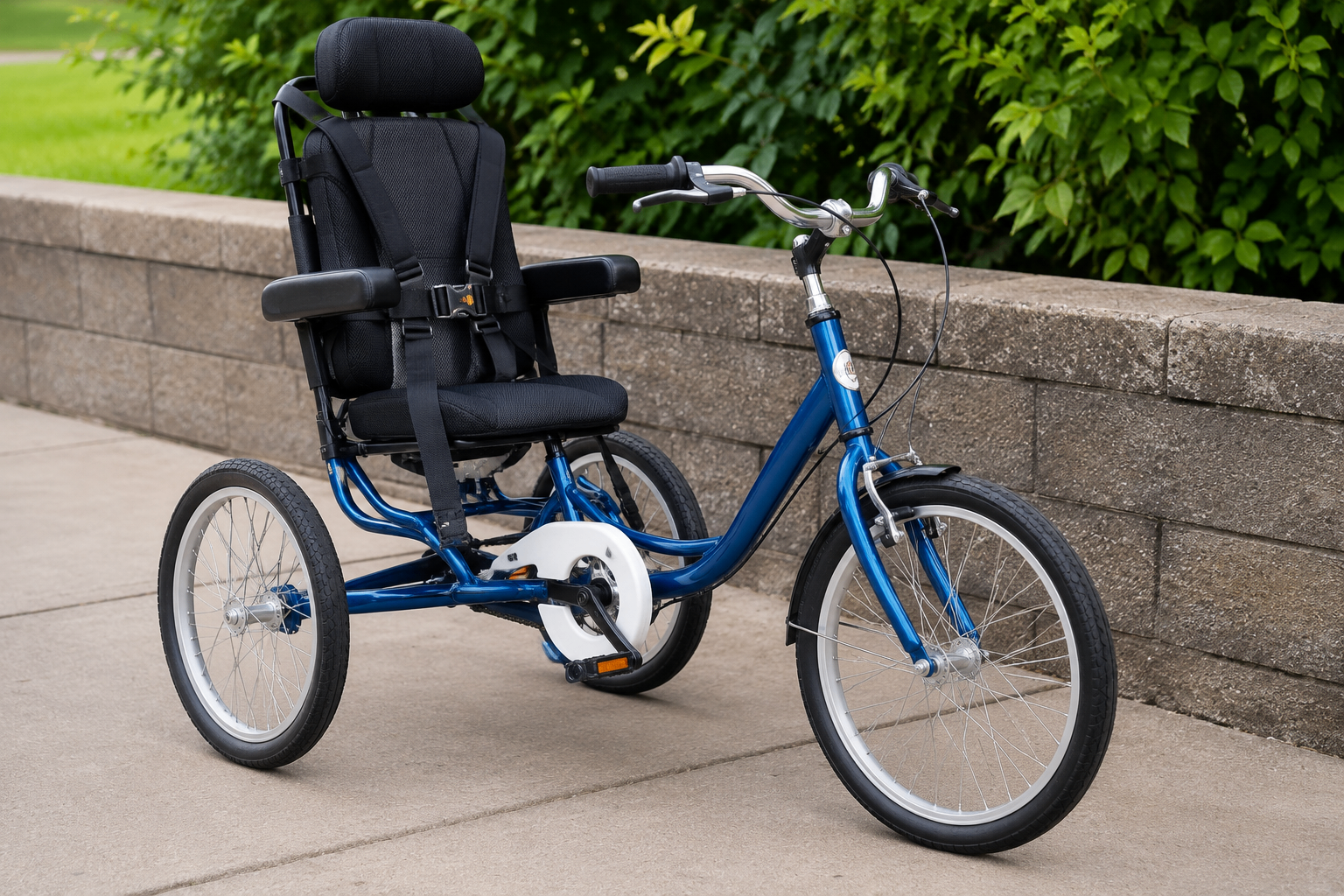
Adaptive Tricycles
Three-wheel designs that provide additional stability and confidence for children working on balance or endurance.
Walking & Active · Reference Guide
Helping children continue riding, exploring, and participating when a traditional bicycle becomes more difficult.
For many families, an adaptive bike becomes one of the most meaningful pieces of equipment they ever bring home. Not because it is medical equipment — because it allows a child to keep doing something they love.
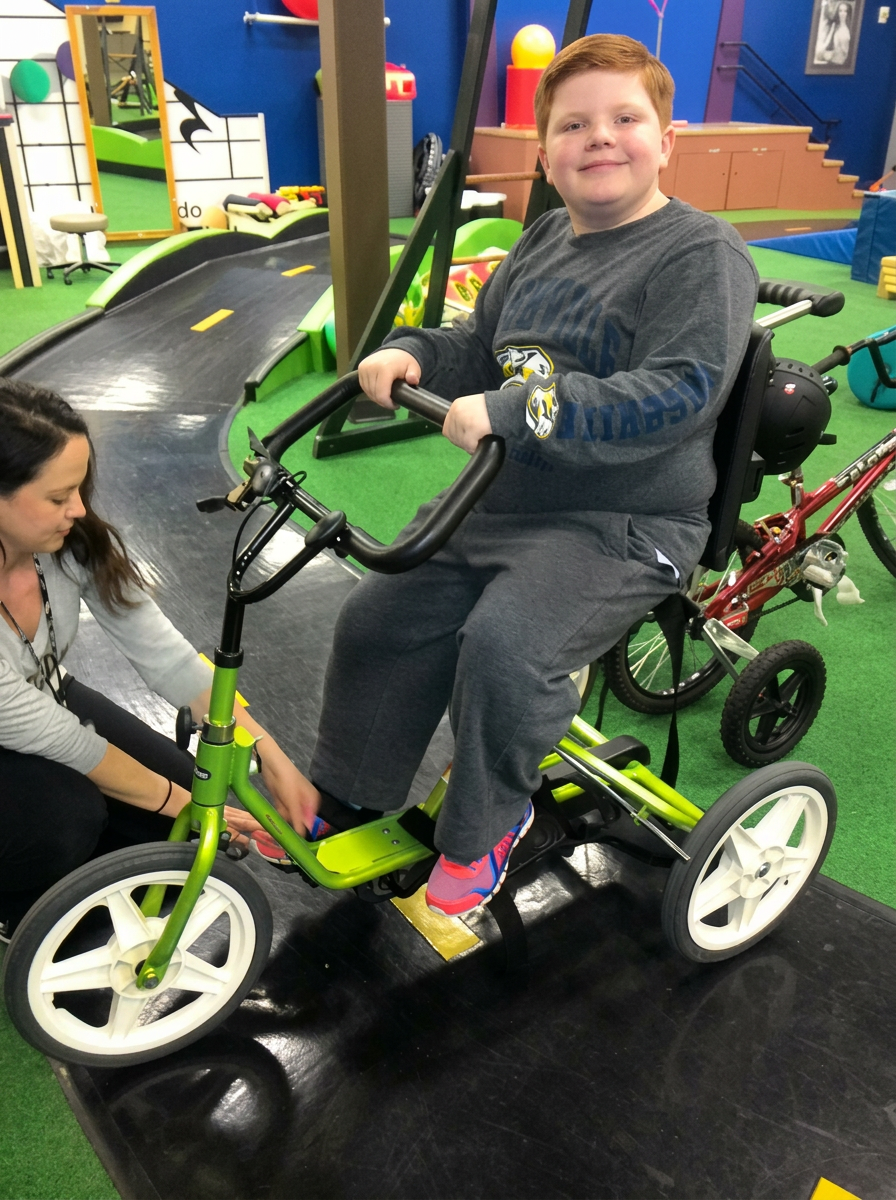
Adaptive bikes help children continue riding with siblings, friends, parents, and neighbors while providing additional stability, support, and confidence.
The goal isn't simply riding a bike. It's preserving participation.
Adaptive bikes are designed to help children continue participating safely while supporting changing physical needs. For some children, that means additional balance. For others, it means better positioning, improved endurance, or increased confidence.
The purpose isn't simply exercise. It's helping children continue exploring their neighborhoods, riding with friends, building independence, and creating memories with their families.
Whenever possible, adaptive bikes should be professionally fitted. A proper fitting isn't a luxury — it's what allows the bike to work for the child long term.
A good fitting improves:
The best bike depends on each child's:
Work closely with your physical therapist or rehabilitation team throughout the process — they often have relationships with vendors, clinics, and demo programs that families don't find on their own.
A starting point for understanding what's out there. Your PT team can help you decide which style is the right fit for your child today — and what may come next.
Three-wheel designs that provide additional stability and confidence for children working on balance or endurance.
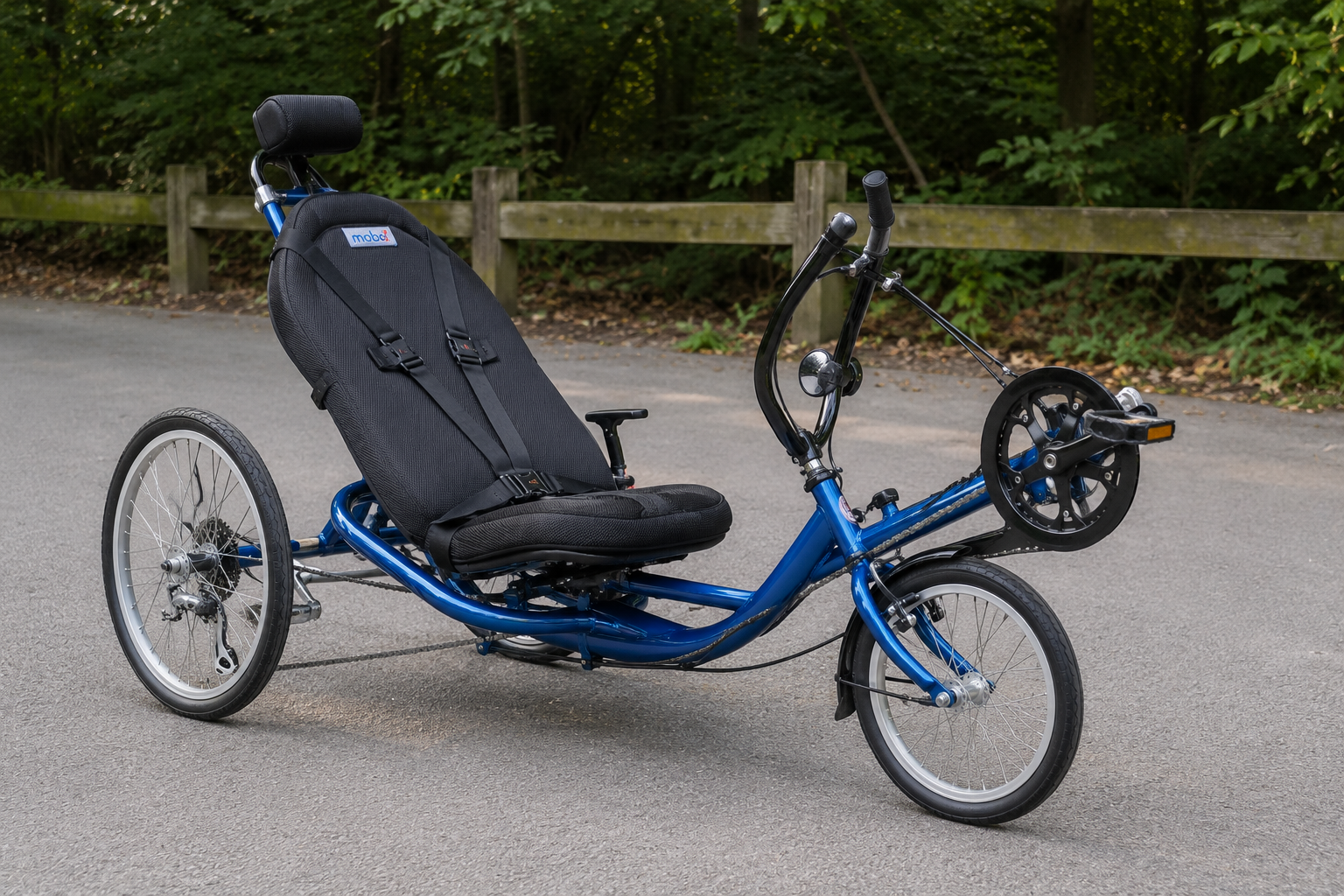
Lower seating positions that provide additional back and trunk support, often with more comfortable pedaling angles.
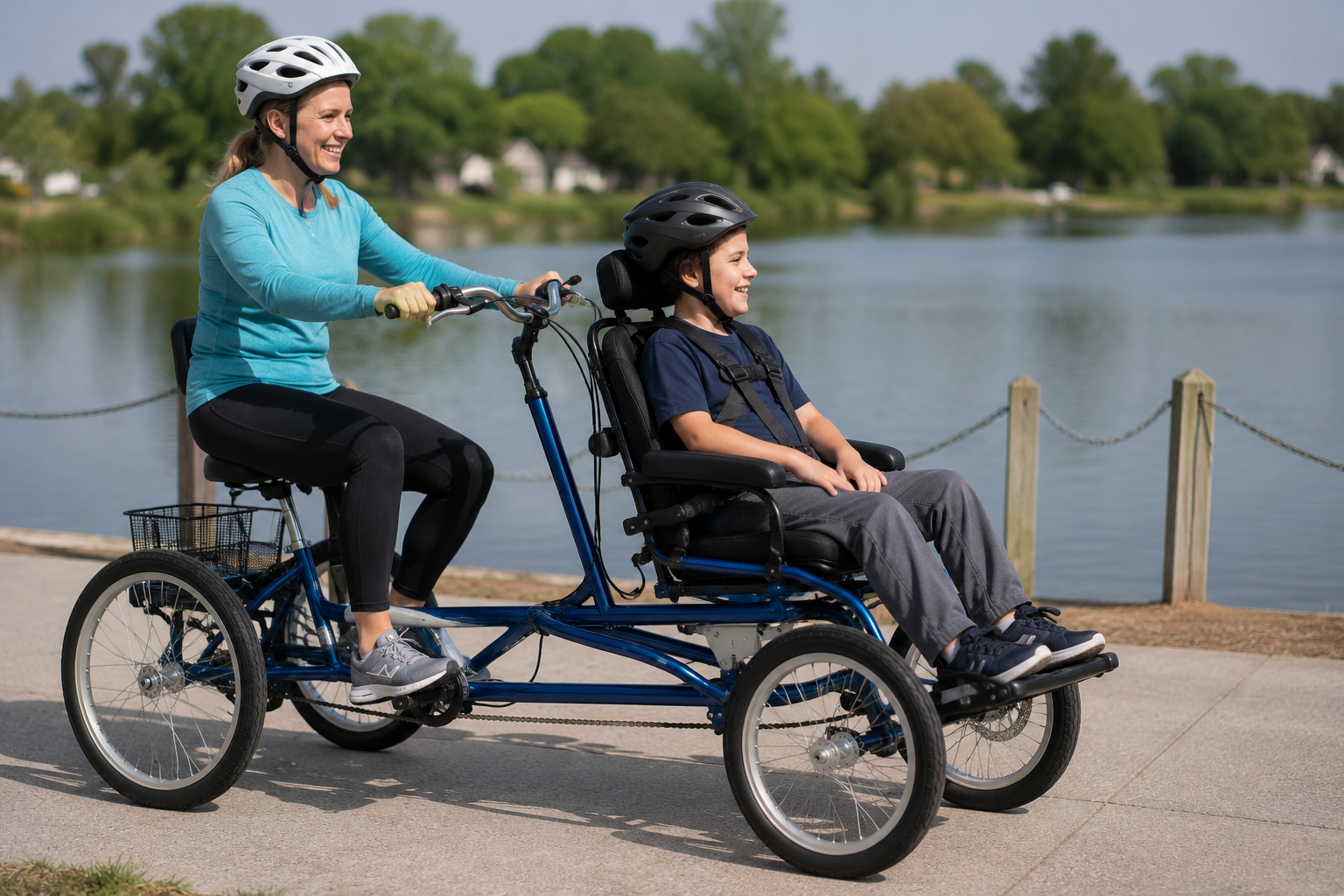
Allow a parent, sibling, or caregiver to assist with steering, pedaling, or balance while riding together.
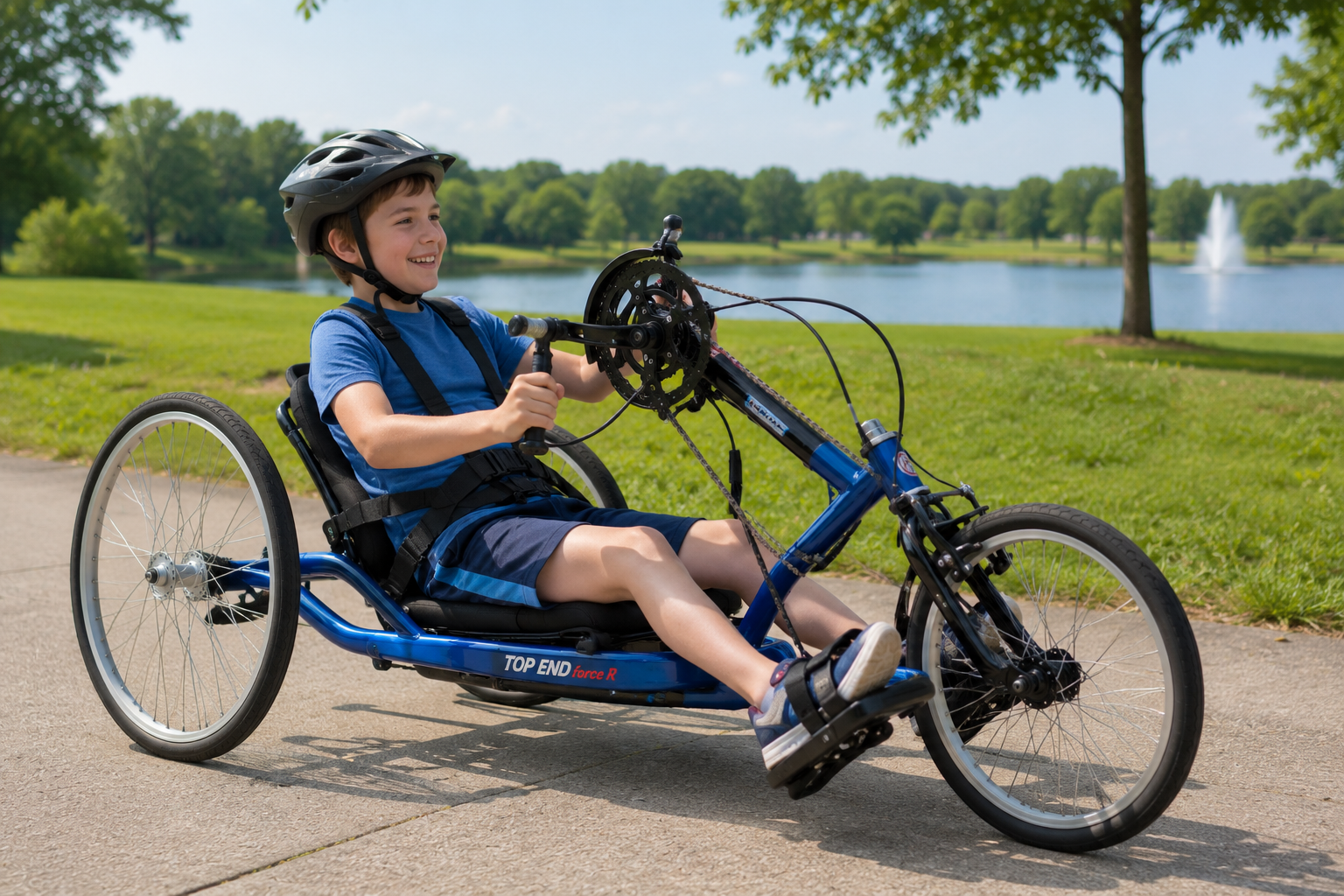
Designed for riders who propel using their arms — a great option as leg strength changes over time.
Six places to begin. You don't have to do them all at once — and you don't have to do them in this order.
Start with the person who knows your child's movement best. They can help match a bike style to current needs and goals.
There is no single right answer. Reading, watching demo videos, and visiting clinics can help narrow the options.
Many organizations host events where children can try multiple bikes in one day with trained staff on site.
A proper fitting protects posture, comfort, and safety — and adds years to how long a bike will work well.
Grants, nonprofits, and community fundraisers can help cover the cost. Start early — many programs have wait lists.
Ask about adjustable frames, trade-in programs, and how long this bike will fit before the next one is needed.
Bring this list to your next visit, or save it for the conversation that's coming.
Funding opportunities change regularly, and eligibility varies by location and diagnosis. Always confirm current information directly with each organization.
National nonprofit providing adaptive bikes and equipment to children with disabilities through its Freedom Program.
Visit siteNational network of adaptive sports clubs that often host bike clinics and demonstration events.
Visit siteMuscular Dystrophy Association resources and events that often include adaptive cycling.
Visit siteAnnual nationwide campaign that helps families fundraise for adaptive bikes.
Visit siteCare navigation that can help identify equipment funding sources for Duchenne families.
Visit siteResource center that can point families to grants and assistance programs for equipment.
Visit siteProvides custom-built therapeutic tricycles through local chapter funding.
Visit siteChildren often outgrow adaptive bikes — plan ahead for the next size.
Ask about trade-in or exchange programs from manufacturers and vendors.
Some communities have adaptive bike lending libraries you can borrow from.
Adaptive recreation organizations frequently host free demo events.
Your physical therapist may know about local funding sources that aren't widely advertised.
Insurance coverage varies and may depend on documented medical necessity.
Related resources
Preserving joy, participation, and adventure during the walking years.
OpenProtecting strength, energy, and participation throughout the walking years.
OpenStretches, exercises, and movement activities for daily life.
OpenWorking with your PT team across every stage of Duchenne.
OpenFunding for equipment, travel, and accessible adventures.
OpenEmotional well-being, confidence, siblings, relationships, and finding community during the walking years.
Open