An Open Letter
An Open Letter About Finding Freedom
There are moments in this journey that divide your life into before and after.
For our family, one of those moments was the day we realized Jake needed a power wheelchair. I wish I could tell you I embraced it. I didn't. I cried. Not because of the chair itself, but because of everything I believed it meant. To me, it felt like another door closing. Another reminder that Duchenne was asking us to let go of the future we had imagined for our son.
I thought independence meant needing less. Less help. Less equipment. Less Duchenne. What I didn't understand then was that Duchenne was about to teach me one of the most beautiful and painful lessons of my life.
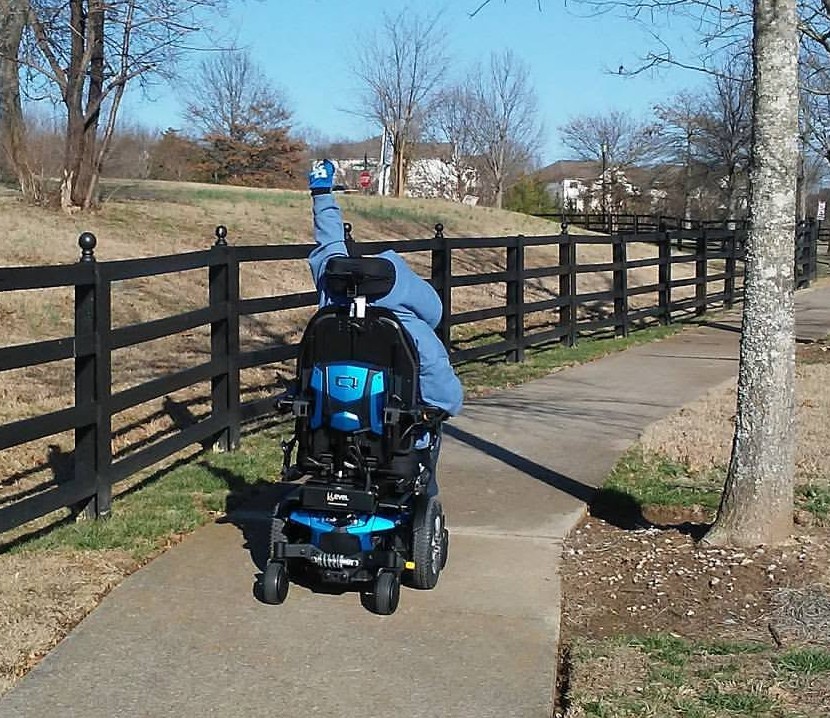
I'll never forget the first day Jake drove his power chair on his own. I watched him take off down the sidewalk, and without even thinking about it, he threw his arm into the air in celebration. I didn't ask him to pose. I didn't even realize what he had done until later when I looked at the picture. While I stood behind him grieving what I thought we had lost... my son was celebrating everything he had just found. That moment changed me. The wheelchair hadn't taken his independence away. It had given it back.
From that day forward, I began to see every new adaptation differently. The accessible van. The shower chair. The lift. The equipment that first broke my heart somehow became the very things that opened up our world again. They gave Jake more choices, more dignity, more freedom—and they gave our family the confidence to keep saying yes to life instead of no because it felt too hard.
That's why we call this section Growing Independence. Because in Duchenne, independence isn't measured by how little support someone needs. It's measured by how much life they're able to live.
If you're standing where I once stood, looking at the next wheelchair or the next adaptation through tears, I hope you'll borrow my perspective until you discover your own. It is okay to grieve. I still do. But I've learned that some of the things I feared most have become the very things that gave my son the freedom to keep moving forward.
And if you ever need a reminder... I hope you'll remember the little boy with one hand in the air, celebrating a future that his mother couldn't quite see yet.
With love and hope,

Jake's Mom